Three perspectives on
the same gap
Two of us have known each other since high school. Two things have stayed constant over the years: a close bond with our grandparents, and strength training. HALTBAR grew out of the wish to let our parents and grandparents age with dignity — and out of the fact that we could not find an offering that took both sides of that seriously: the evidence and everyday life.
Today there are three of us, with three ways into the same problem. Sinan comes from biomedical research, Julian from data analysis, Marwin from sports therapy. Whatever ends up in the course and the app has to pass all three.
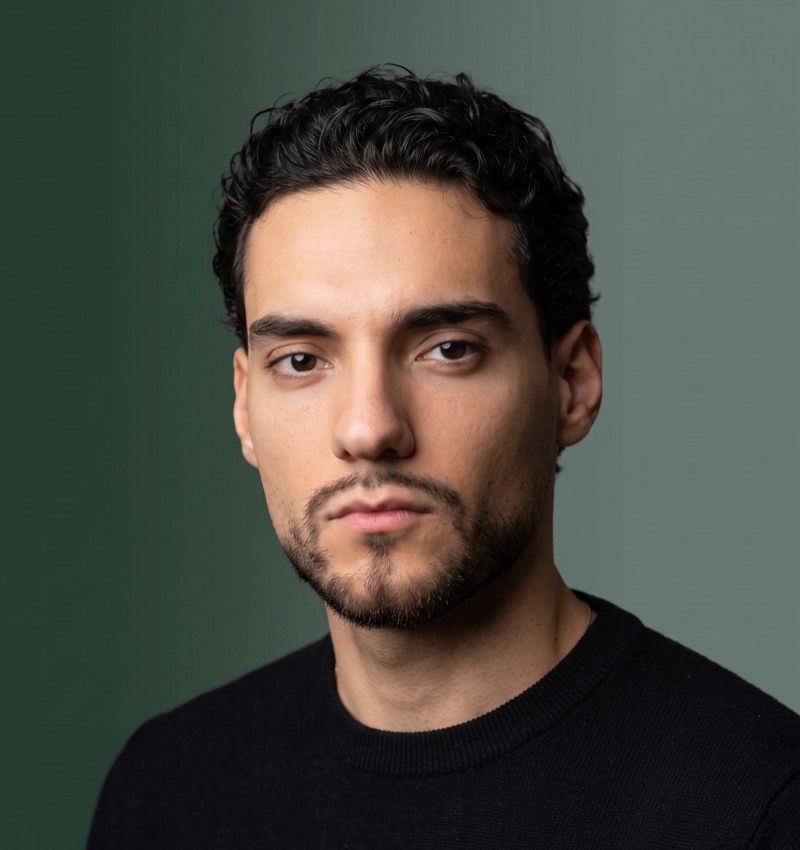
A fall my grandmother had showed me how thin the line is between independence and needing care. I have visited my grandparents every Sunday since I was a child — my parents taught me early on to value our elders and the time we have with them. Which is why it hits me all the harder to watch my once so self-reliant grandmother decline, physically and mentally, since her accident.
Professionally, I come from biomedical research. I am completing my M.Sc. in Molecular Biology at Humboldt University of Berlin in spring 2027 and currently work at the Berlin Institute of Health at Charité on stem cell therapies for liver fibrosis. Before that I did research at the Max Delbrück Center and in the laboratory of Emmanuelle Charpentier, Nobel laureate and co-discoverer of the CRISPR/Cas9 gene-editing tool.
What became increasingly clear to me over my academic career: research and funding are directed almost entirely at treating disease. That matters, and it saves lives. At the same time, it means we spend a disproportionate amount of money fixing problems that could often have been prevented.
HALTBAR starts at the other side. We build muscle strength for the people who need it most urgently: the sandwich generation between 40 and 65. The evidence points clearly in one direction — those who maintain their muscle strength into old age not only live longer, they spend those years in considerably better shape. And this is exactly where existing offerings fail: they do not reach this age group, and they give it nothing that works. That is the gap we want to close.
What I contribute to HALTBAR is the evidence base. Every decision in the course and in the app should be measurable against it — because we want our parents to enjoy their well-earned retirement in the best physical shape possible.

As a teenager I played soccer passionately, and since early adulthood I have been at home in strength training and boxing. Strength and movement were never a project for me, but always a part of how I live.
My family and their health are deeply important to me: I visit my grandparents frequently, and for a couple of months now, I have been going to the gym with my mom. Her happy smile after a tough workout is one of the main reasons I wanted to build HALTBAR — to enable others to share this empowering experience and spend quality time together.
I used my bachelor's degree in business administration to find my real passion: data analysis. Currently, I am working on my master's in Information Systems Management at TU Berlin, focusing on machine learning. At HALTBAR, I bring both together — the understanding of how training actually works in everyday life, and the methods to turn research into concrete, individual recommendations.

I have worked as a sports therapist at a Berlin rehabilitation centre since 2023. People come to me after hip surgery, after a fall, after a slipped disc. Sooner or later, many of them say the same sentence: that they wish they had started earlier.
What keeps me in this work is how much is possible. Strength can be built in almost any phase of life, even after long breaks. The difference lies in whether someone starts at 50 or has to start at 70.
I earned my B.A. in Sports Therapy and Prevention, along with certifications in osteoporosis and fall-prevention training.
At HALTBAR I lead the prevention courses. My job is translation: turning the methodology into a class that people with no training experience can follow and that still provides a real stimulus. And because I see where things break down in practice, it works the other way round too.